 01 / 03
Network
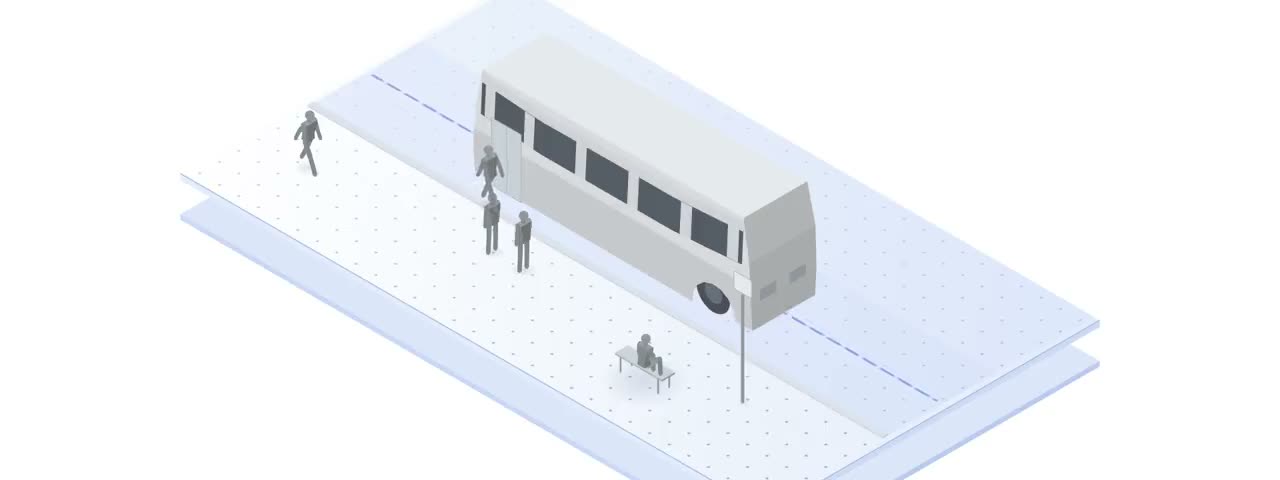
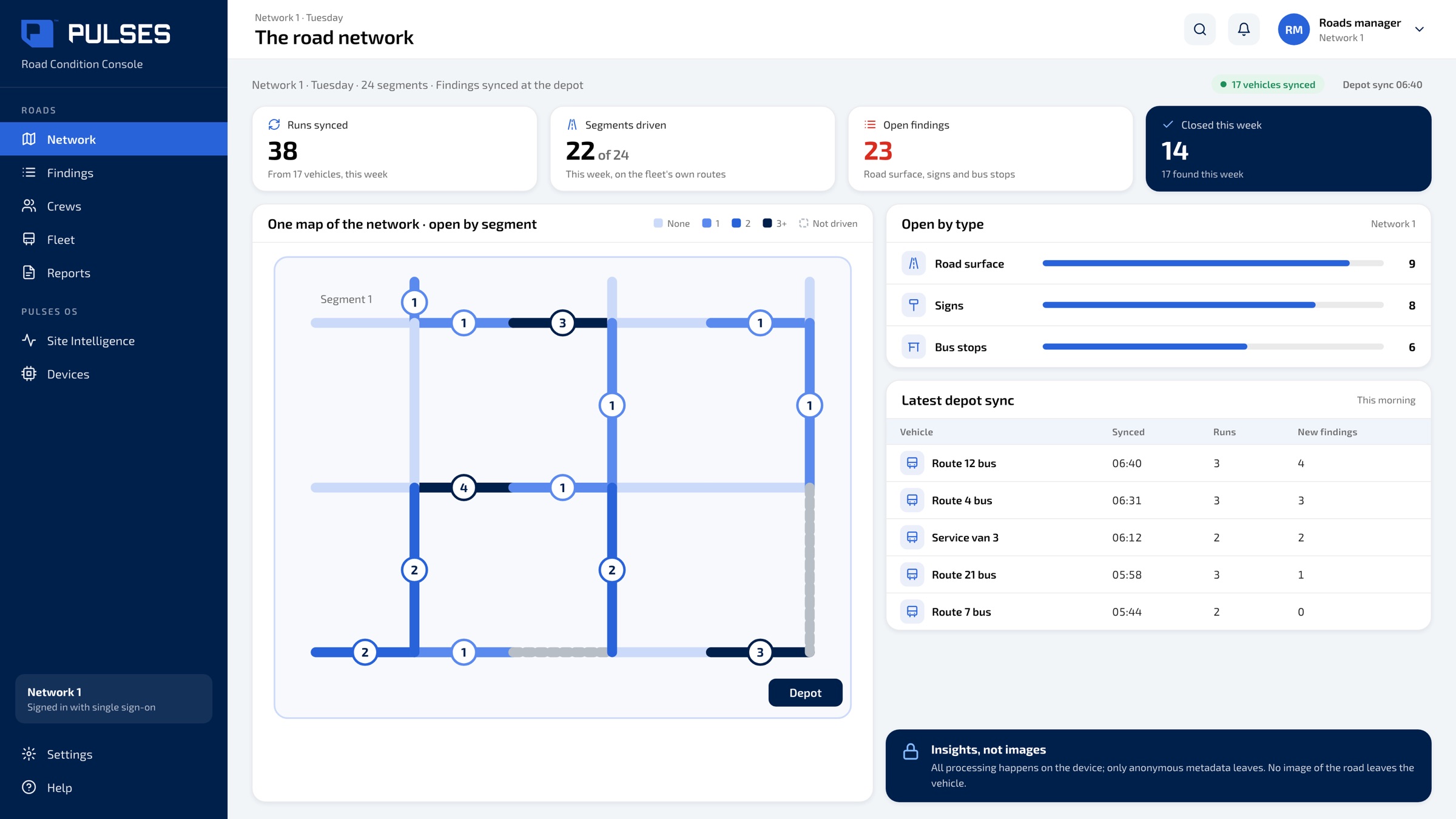
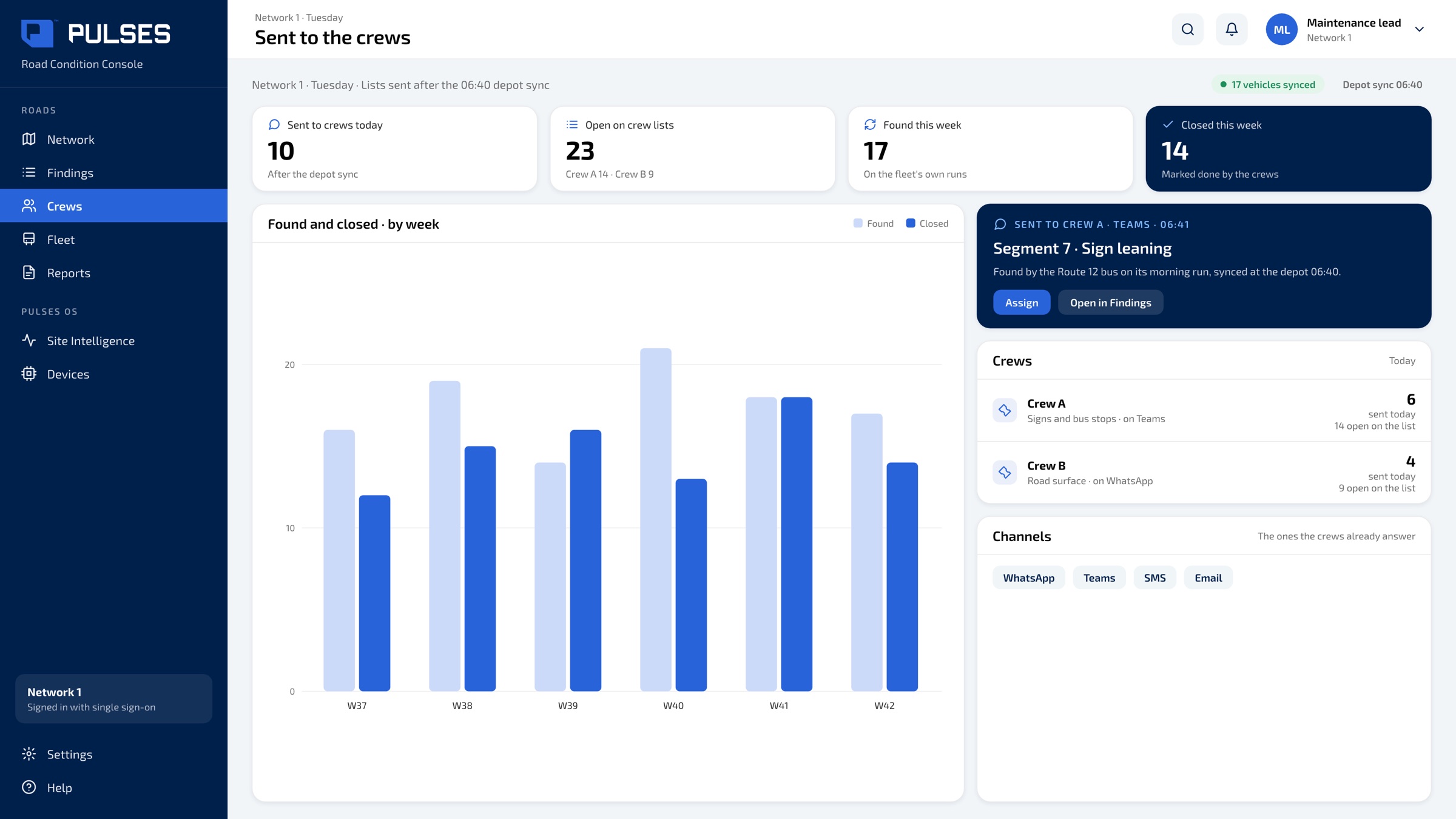
Each run adds to one map of the network, segment by segment: open findings on each segment, and the latest depot sync.
For road authorities: damage waits unreported. Your buses and service vans already drive these roads each day.
For road authorities and municipalities where damage waits to be reported. A Pulses Vision Roam device on the dashboard of the buses and service vans that already drive your roads understands road, sign and bus-stop damage on each run. Pulses Ops adds each run to one map of the network, segment by segment, with signs, shelters and the road surface in one list, each finding with its segment and the vehicle that found it. Findings stay on the device and sync at the depot, and your crews get their list on WhatsApp, Teams, SMS or email, found and closed week by week. All processing happens on the device; only anonymous metadata leaves, and no image of the road leaves the vehicle.
A Pulses Vision Roam device on the dashboard understands road, sign and bus-stop damage. Buses on their routes and service vans on their rounds carry the same device.
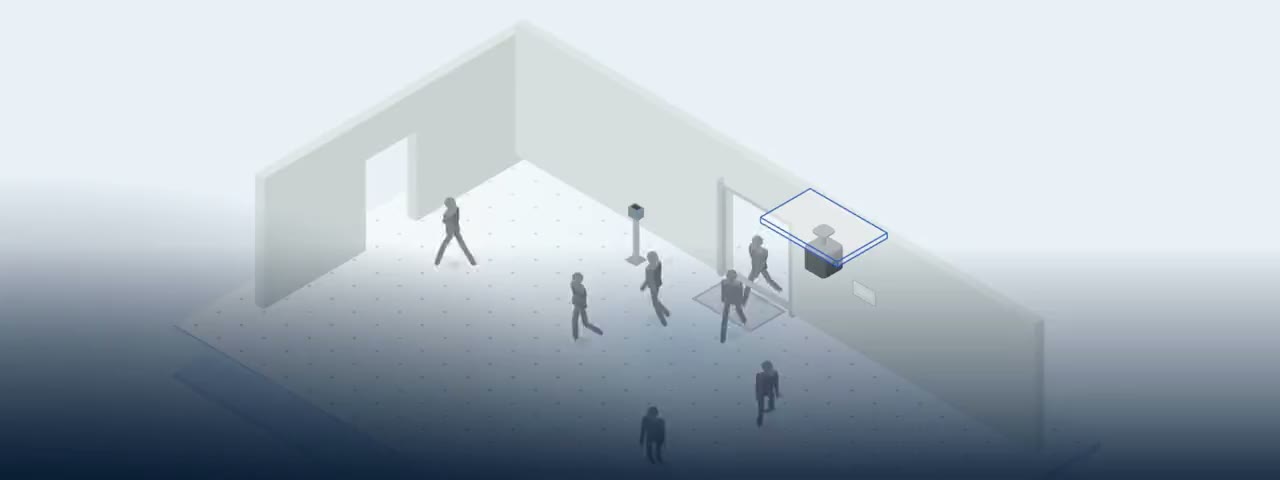
Each run adds to one map of the network, segment by segment. Signs, shelters and the road surface sit in one list.
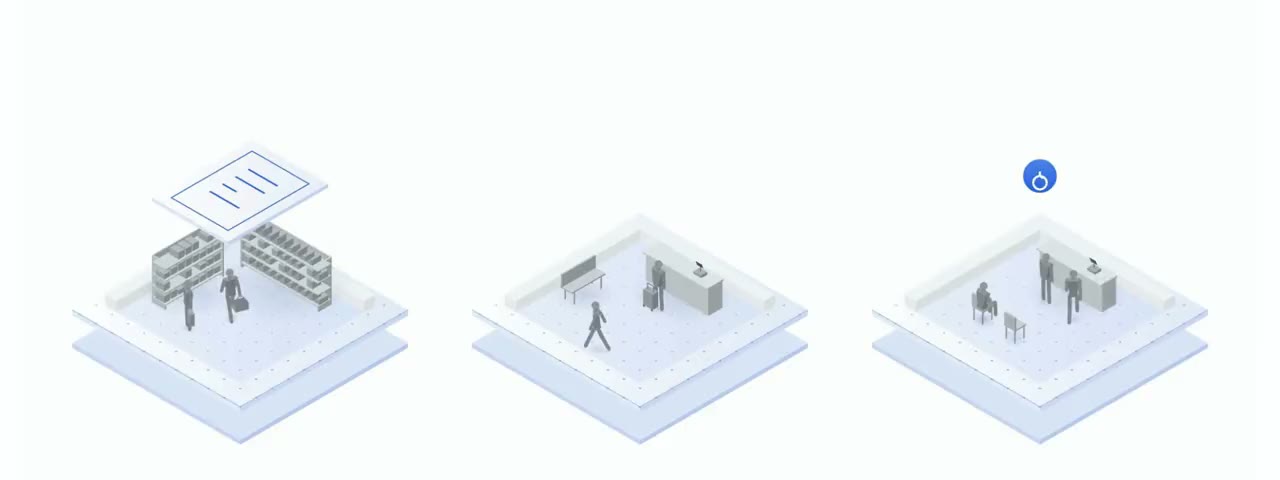
Findings stay on the device and sync at the depot. Your crews get the list, on the channels they already answer: WhatsApp, Teams, SMS or email.
01 / 03 Each run adds to one map of the network, segment by segment: open findings on each segment, and the latest depot sync.
 02 / 03
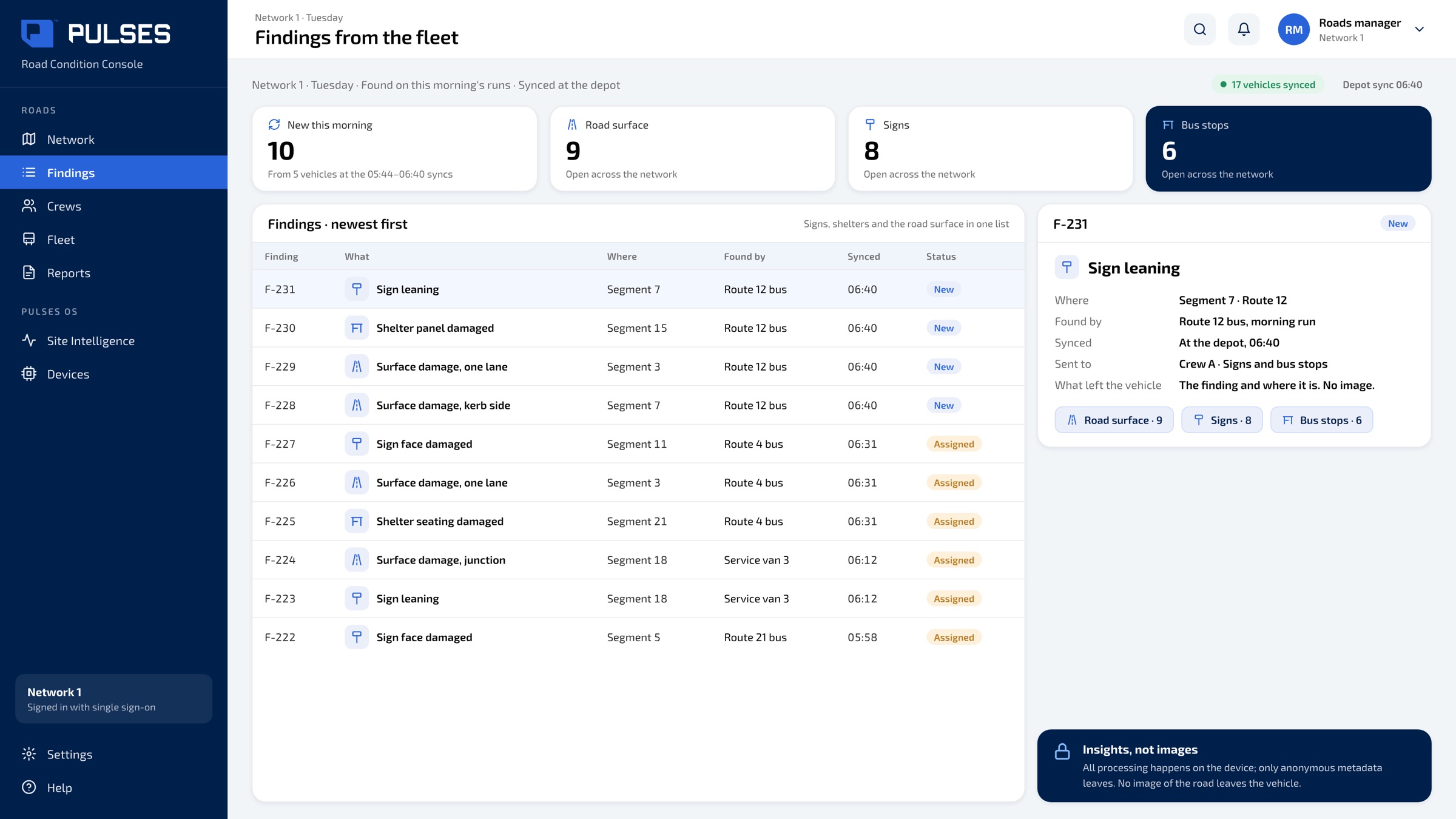
Signs, shelters and the road surface sit in one list, each finding with its segment and the vehicle that found it.
 03 / 03
Your crews get the list, on the channels they already answer: each crew's list after the depot sync, found and closed week by week.
On municipal roads, buses and service vehicles drive the same streets each day. Yet damage waits until someone reports it. Pulses. AI for the physical world. A Pulses Vision device on the dashboard understands road damage. Each run adds to one map of the network. Signs, shelters and the road surface sit in one list. Findings stay on the device and sync at the depot. Your crews get the list, on the channels they already answer. Over one hundred and fifty million journeys counted across Pulses deployments. Designed and made in the UAE. See the full showcase.
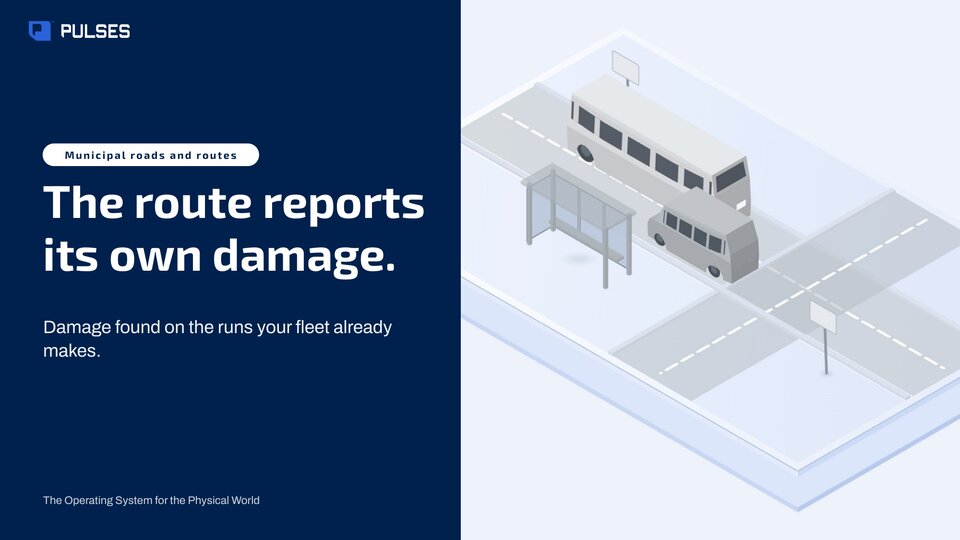
The story for your leadership team: the problem and how it works.
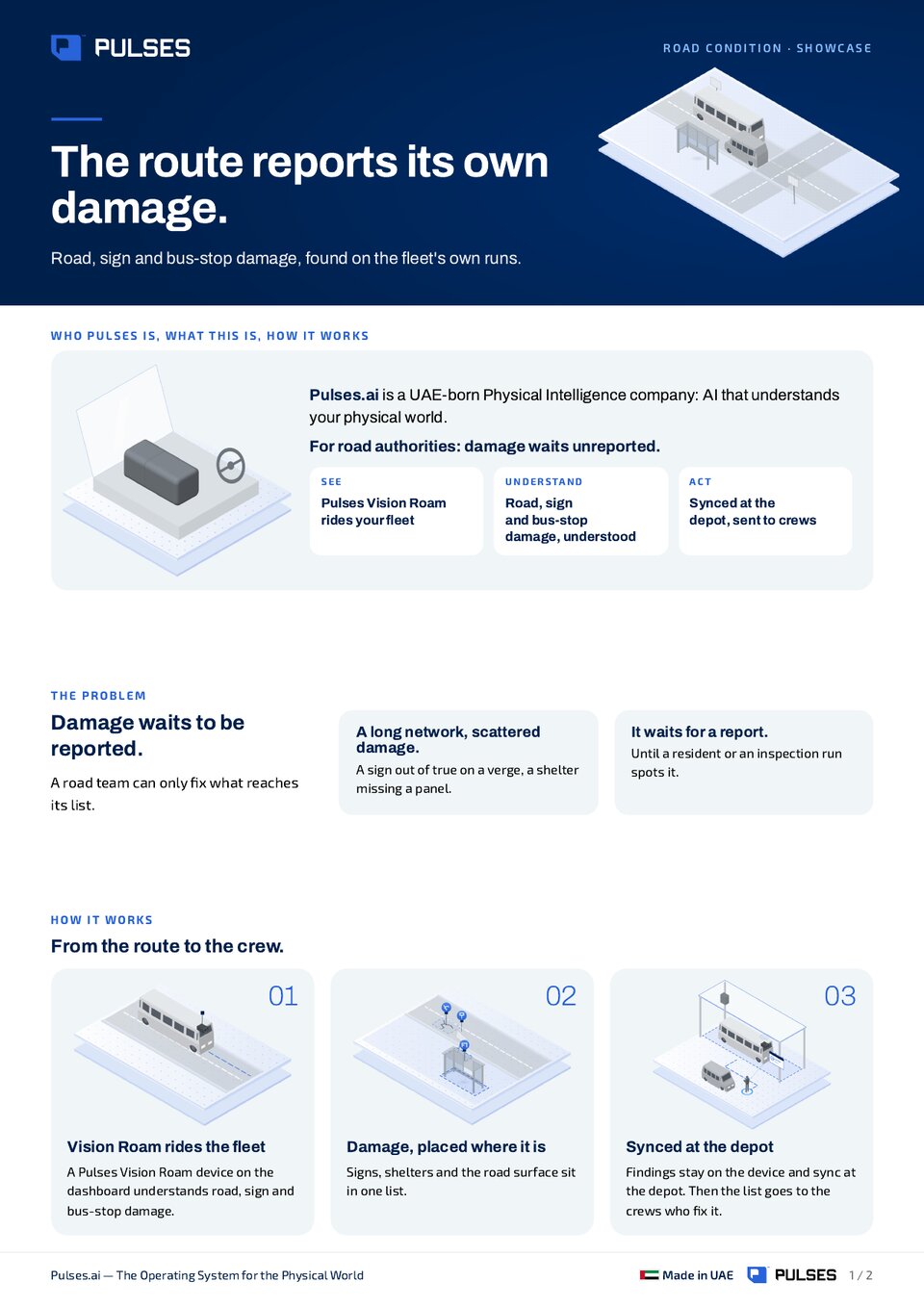
Print-ready. Hand it on after the walkthrough.
Pulses does it with a Pulses Vision Roam device on the dashboard of the buses on their routes and the service vans on their rounds. On each run it understands road, sign and bus-stop damage, and Pulses Ops adds the findings to one map of the network, segment by segment. Your crews get the list after the depot sync.
Pulses Vision Roam works on board: it processes what it sees on the device as the vehicle drives, keeps its findings on the device, and syncs them at the depot. No image of the road leaves the vehicle; only the findings do, each with its segment and the vehicle that found it.
Findings stay on the Pulses Vision Roam device until it syncs at the depot, and no image of the road leaves the vehicle. What reaches Pulses OS is the finding: what it is, its segment and the vehicle that found it. Your crews see that list on the channels they already answer.
We walk through your routes and depots with you, segment by segment.
Ask Pulses
Hello. Ask a question, or type your business.
Pulses spots a growing queue or a late car as it happens, and alerts your team.
What leaves the device is anonymous data, not video.
No. Pulses works alongside it, and can process its feeds on site.
Pulses Vision indoors, Vision Pro outdoors, Vision Tower for temporary sites, Vision Roam on vehicles.
Your supervisors, on the channels they use, with your approval.
Book a walkthrough. We find where Pulses helps first.
See Pulses at your site. Book a walkthrough.
Book a Walkthrough