Thought Leadership
Footfall Is a Vanity Metric. Unique Visitors Are the Truth.
For twenty years, retail has measured its physical stores with a single number: footfall. That number lies. Here's how edge AI gives retail the analytical rigour the web has had since 2005.
Pulses.aiEditorial6 min read

For twenty years, retail has measured its physical stores with one number: footfall. A door counter. A beam across the entrance. Every time something interrupts the beam, the number goes up.
The trouble is, that number lies.
The same shopper who walks in, walks out to grab a coffee, walks back in, walks to the changing room, and walks back to the floor counts as five "visits." The family of four who arrive together count as one. The delivery driver who steps in to drop a parcel counts the same as the customer who spent forty minutes deciding on a jacket. The beam doesn't know. The beam can't know. It was never designed to.
This is why retailers still cannot answer the most important question in their business: how many unique humans walked our store today, and what did they actually do?
The Digital Mirror Image
Online retail solved this problem a decade ago. Google Analytics doesn't count visits in any meaningful sense — it counts unique visitors, sessions per visitor, time per session, page-by-page journeys, conversion funnels, drop-off points, and return frequency. Few e-commerce operators would accept a "door counter" as their analytics stack.
Yet physical retail — the channel that still drives the majority of global retail revenue — runs on exactly that.
Pulses.ai exists to close that gap.
Why the Difference Is Edge AI
Here is where Pulses differs from other people-counters and footfall devices. Most devices in this category fall into one of three architectures:
- The beam. Cheap, ubiquitous, and fundamentally incapable of distinguishing one human from another. Double-counts everything. Tells you nothing about who, what, or why.
- The cloud-bound camera. A camera in the ceiling that ships raw video — or raw frames — to a remote server, where AI inference happens hours later in a batch process. Even the ones that call themselves "AI" almost always do the heavy lifting in the cloud. That means latency. It means raw video leaving the store. It means privacy exposure your legal team should already be worried about. And it means re-identification across cameras either doesn't happen, or happens by uploading biometric data to a third party.
- The IP camera with bolt-on analytics. A security camera with a software layer. The analytics quality is whatever the cloud vendor felt like building. The hardware was never designed for inference.
Pulses is none of these.
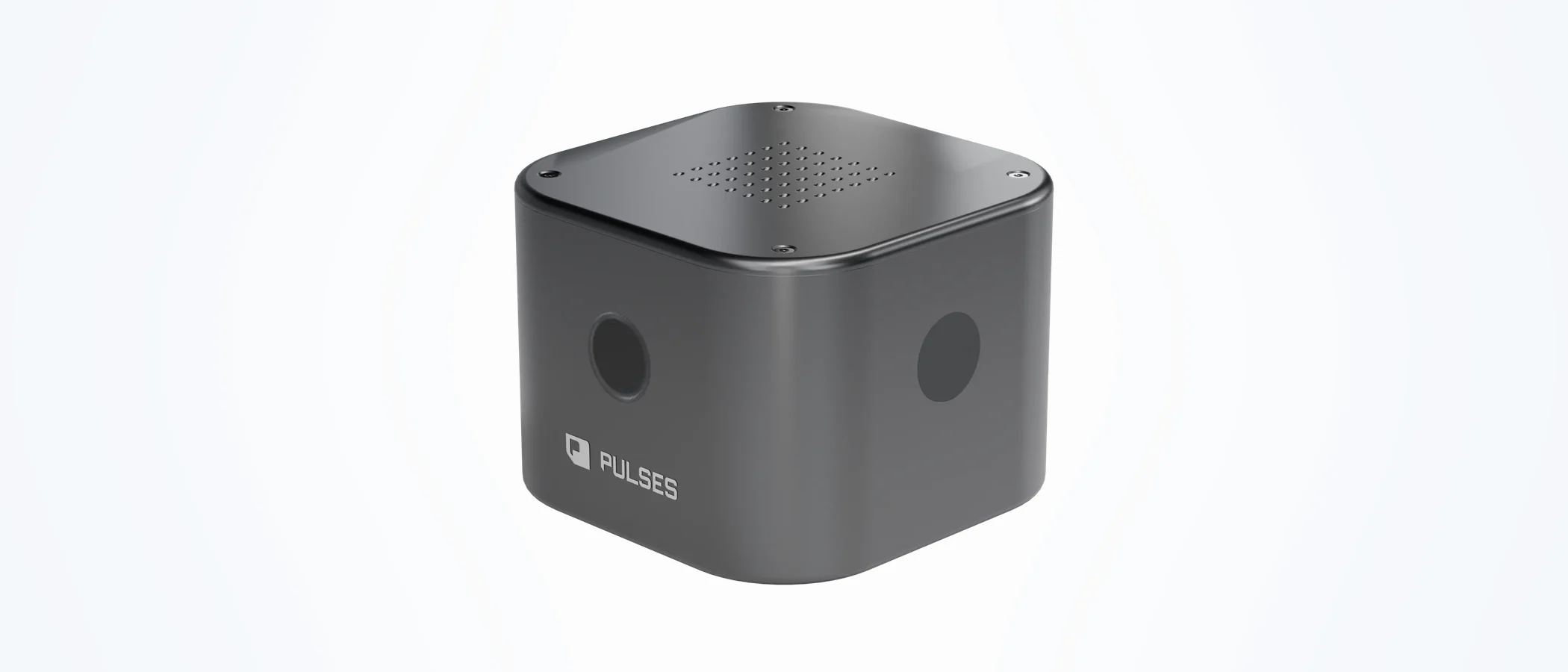
Pulses Vision is a purpose-built device that processes video on the device itself. It counts each visit once, anonymously, as people move from the entrance to the womenswear floor, the fitting room and the till. What leaves the device is anonymous data, not video.
The result: one visit counts as one visit, and the store sees anonymous data, not video.
What Retailers Actually Get
With Pulses CX deployed across a store, the retailer finally sees their physical business the way they see their website. Unique visitors. Real ones. Counted once per person per visit, as they move through the store. Time-on-store and time-per-zone — the physical equivalent of session duration and page time. The conversion funnel: entered the store, reached the floor, engaged with a product, entered the fitting room, arrived at the till, purchased. Drop-offs show up. Chokepoints get named.
Dwell time shows where people pause, hesitate or walk past. Return frequency, anonymised on the device, tells the store whether a visitor has been in before, without knowing who they are.
Privacy Is Not a Trade-Off
A cloud-bound system has to send video off site to do any of this. Once raw video leaves the store, the privacy story collapses.
Pulses processes video on the device. What leaves is anonymous data, not video, and network traffic is outbound-only. The store gets richer data and a stronger privacy posture at the same time.
"Insights, not images." The retailers who win the next decade will be the ones who finally measured their physical floors with the same rigour they've applied to their websites for twenty years.
Ready to begin?
Want to see your store the way the internet sees a website? Book a demo.
Related Articles
-
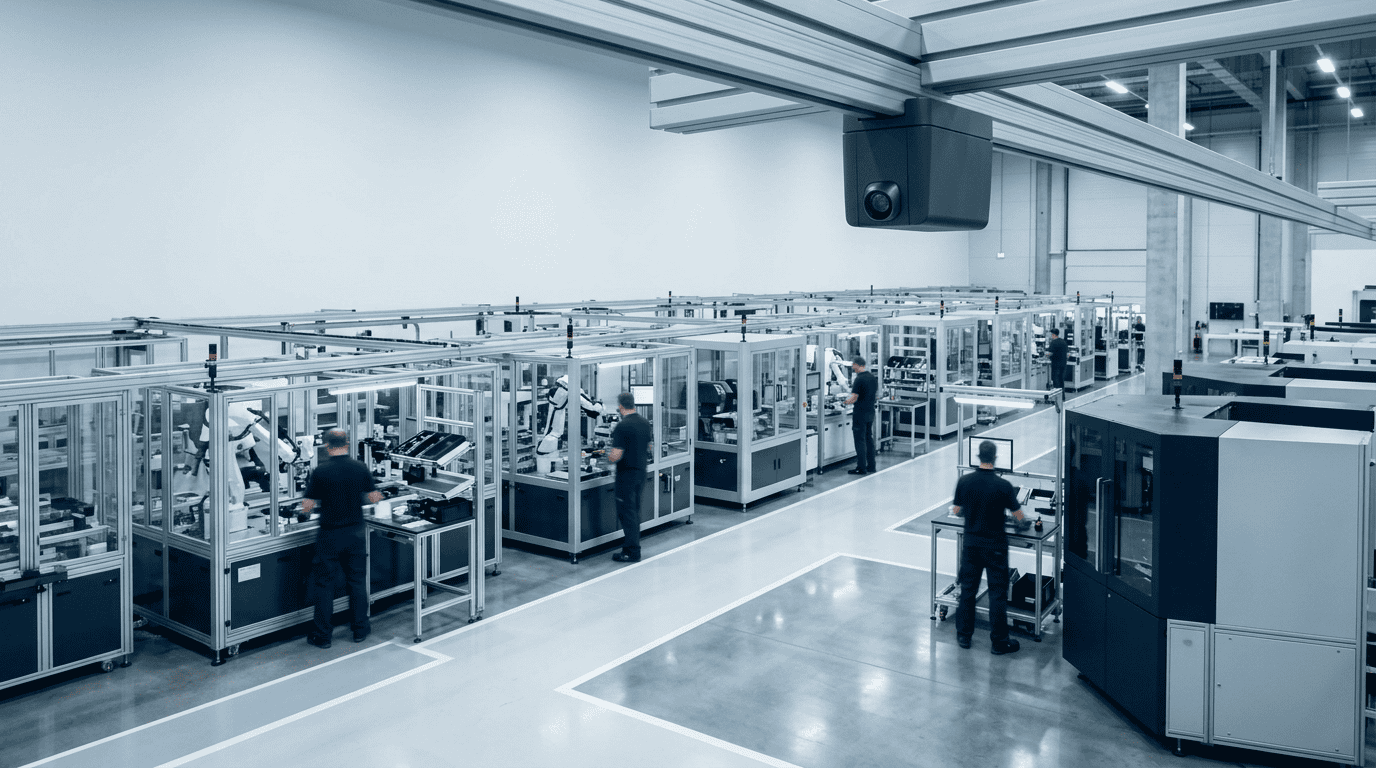 Industry
 The Silent Floor: Using Edge AI to Find Bottlenecks on the Production Line
5 min read -
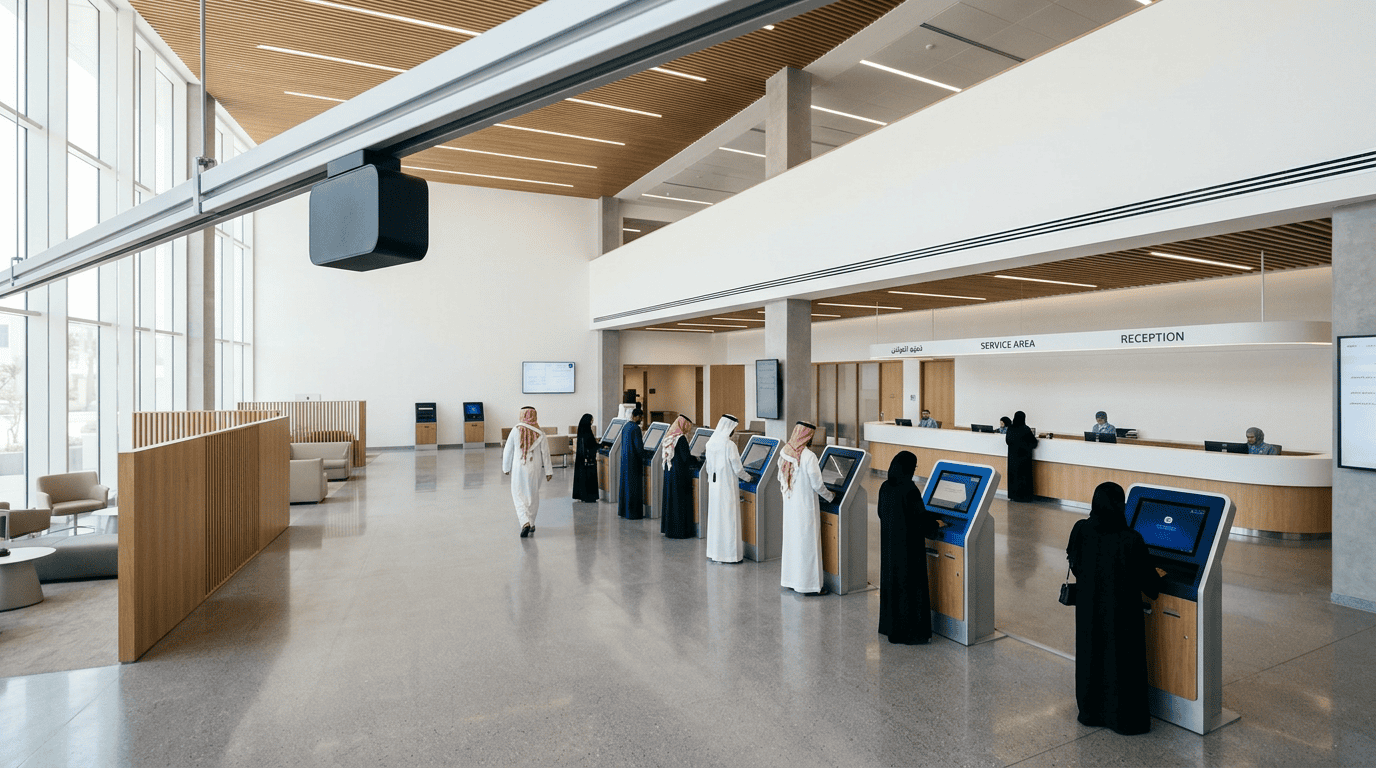 Industry
 From Queues to Citizen Experience: How Physical Intelligence Is Reshaping the Public Service Center
5 min read -
 Industry
 Live Data from Load-In Day: Why Event Operators Are Replacing Clipboards with Physical Intelligence
5 min read